
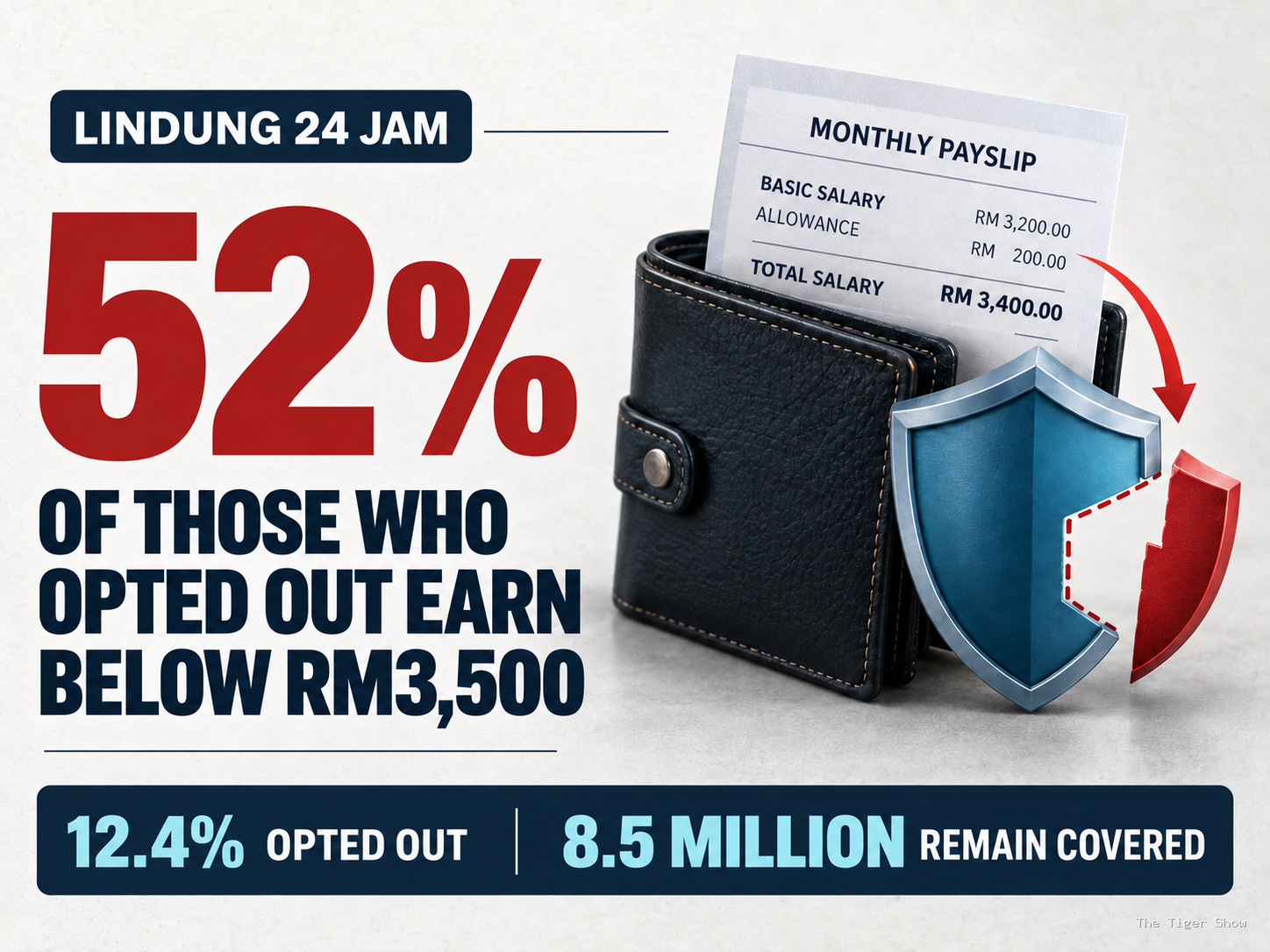
Its group chief executive officer Datuk Seri Dr Mohammed Azman Aziz Mohammed said 12.4 per cent of local workers chose not to continue contributing when the opt-out window closed on Aug 31, while 87.6 per cent, or about 8.5 million workers, remained covered.
The remaining 48 per cent of those who left earn RM3,500 and above.
He said the pattern was a concern because lower-income workers had filed the bulk of claims since the scheme began.
As at Aug 31, Perkeso received 6,330 claims and paid out RM9.97 million in benefits, an average of about 69 cases a day. Of those claimants, 74 per cent earn below RM3,500 a month.
"Don’t think that because you earn RM10,000 and can afford insurance, you don’t need social protection," he told a press conference at Menara Perkeso, Jalan Ampang here on Wednesday.
Social protection and private insurance served different purposes and could not replace each other, he said.
Dr Mohammed Azman said workers were at their workplace for only about a third of their time. For the remaining 67 per cent, or roughly 244 days a year, they were unprotected if an accident happened outside working hours.
Klang Valley records highest rate
Selangor, Kuala Lumpur and Putrajaya made up 53 per cent of those who left the scheme, followed by Johor at 11 per cent, Penang at nine per cent and other states at 27 per cent.
Perkeso said between 9,000 and 10,000 workers who had earlier opted out rejoined within about nine days of the re-entry portal opening on Sept 2.
Workers who left may rejoin at any time, Dr Mohammed Azman said, but the opt-out window will not reopen after Aug 31.
Contribution borne fully by workers
Lindung 24 Jam took effect on June 1 under the Employees’ Social Security Act 1969 (Act 4), as amended by Act A1788, covering accidents outside working hours and unrelated to employment.
The contribution rate is 0.75 per cent of monthly wages, subject to a RM6,000 wage ceiling, and is borne fully by the employee with no employer share. It is scheduled to rise to 1.0 per cent from June 2028 and 1.25 per cent from June 2031.
Benefits include medical treatment, temporary and permanent disablement benefits, dependants’ benefits, physical and vocational rehabilitation, funeral management and education assistance for dependants.
The scheme was mandatory at first before the Cabinet agreed on July 8 to make contributions voluntary following public feedback, as announced by government spokesman Datuk Fahmi Fadzil. The opt-out option was open on the LINDUNG Benefits Portal from July 13 to Aug 31.
Analysis: Why lower-income workers walked away
Read against household cash flow, the pattern is not a surprise. On the RM1,700 minimum wage, a 0.75 per cent contribution comes to RM12.75 a month, rising to RM45 at the wage ceiling. These are small sums beside the cost of a serious accident, but they leave the pay packet immediately, while the benefit is felt only if something goes wrong. In a household already stretched, a deduction that is certain today weighs more than a risk that may never come.
The deduction also does not arrive alone. Lower-paid workers already carry monthly lines for the Employees Provident Fund, Socso and the Employment Insurance System. One more line, however modest, registers first as a cut in take-home pay.
How the scheme arrived did not help. Deductions began showing up on payslips in June, before the explanation reached most workers, and the scheme moved from compulsory to voluntary in a little over five weeks. MTUC objected to the extra contribution and called it a burden on workers amid rising living costs, while MTUC Sarawak came out in support. When the bodies that speak for workers do not agree, the message reaching workers is unlikely to be consistent.
There is also a protection literacy gap. Bank Negara data shows about four per cent of the B40 group holds life insurance, against 45.5 per cent of Malaysians overall. The group with the least private cover is the same group withdrawing from public cover, and some may have assumed that workplace or personal insurance already filled a gap this scheme was written to close.
The urban concentration reads two ways. City living costs make every ringgit of deduction more noticeable, while better digital access made leaving a matter of a few taps, helped along by the opt-out guides that spread across social media and human resources portals through July and August.
The sharpest number is Perkeso’s own. Workers earning below RM3,500 made up 52 per cent of those who left and 74 per cent of those who claimed. The median formal sector wage stood at RM3,167 a month in the fourth quarter of 2025, according to the Statistics Department, placing this decision among ordinary workers rather than at the margins. As long as staying in a protection scheme depends on what is left at the end of the month, the workers who need it most will remain the ones most likely to let it go.
← Kembali ke halaman utama