
KUALA LUMPUR: The 2027 budget puts more money and more support within reach of some Malaysians through a higher minimum wage, additional cost-of-living assistance and lower personal taxes. Implementation will decide whether that is enough to offset the pressure of everyday spending.
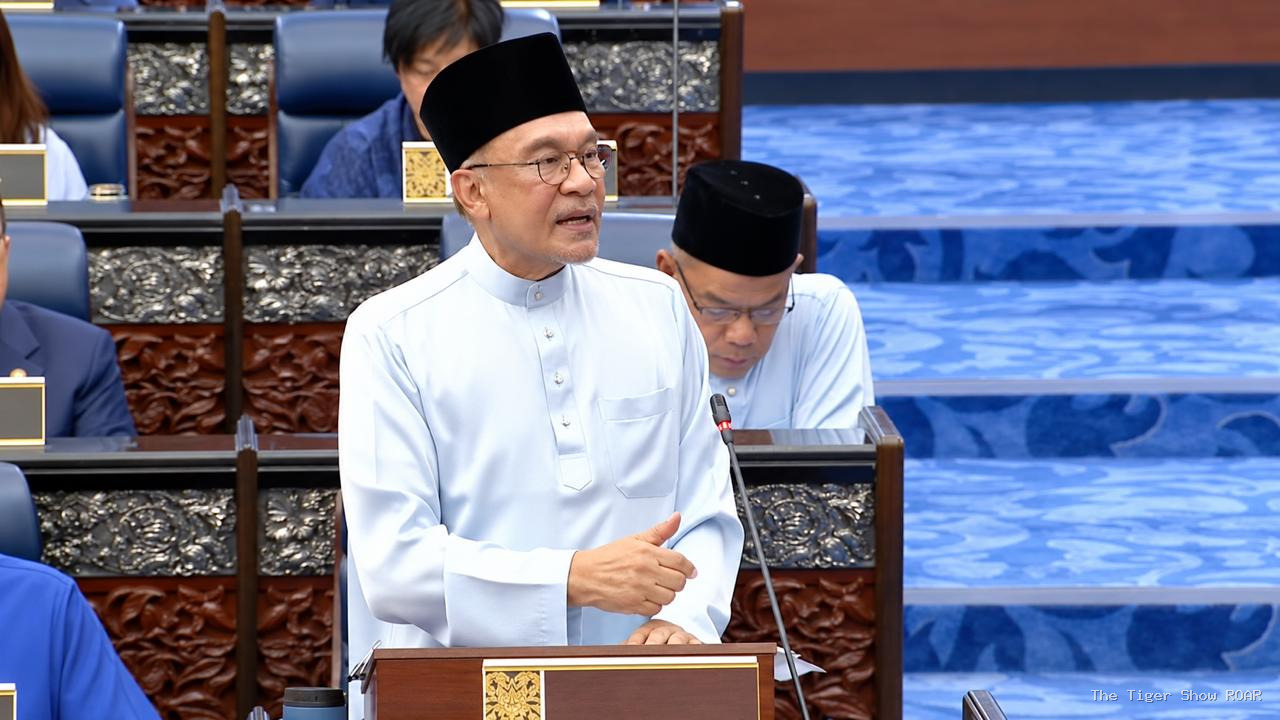
Prime Minister and Finance Minister Datuk Seri Anwar Ibrahim tabled RM459.8 billion in federal expenditure in the Dewan Rakyat on Friday, up 3.6 per cent on this year. Of that, RM376.8 billion is for operating expenditure and RM83 billion for development.
The government presented the budget as a RM510 billion package by adding RM50.2 billion in investment from government-linked investment companies, public-private investment and statutory bodies and companies under Minister of Finance Incorporated. The two figures measure different things, and only RM459.8 billion is direct government spending.
The fiscal deficit target is 3.3 per cent of gross domestic product in 2027, against a projected 3.6 per cent this year. The original target for 2026 was 3.5 per cent.
The split in spending illustrates the government's operating commitments. More than four fifths of the allocation is tied to operating expenditure, meaning salaries, services and existing obligations, leaving a narrower margin for new projects.
The minimum wage and the coverage question
The increase in the minimum wage to RM2,000 a month from RM1,700, beginning in June 2027, is the most visible change for lower-paid workers. An extra RM300 a month could make a real difference to food, transport and basic bills.
But micro, small and medium enterprises with annual sales below RM50 million are exempted from the new rate. That exemption raises a question about how many workers will actually receive it at the outset, given that most private-sector employees in this country work for firms of that size.
The government says more than four million workers come under the new minimum wage. That figure needs to be read alongside the implementation conditions and the definition of exempted companies so its effect is not overstated.
Plans for a RM2,500 floor for graduates and semi-skilled occupations could also improve the returns to education and training. The budget speech, however, does not yet detail enforcement, occupational classification or the timetable for that framework.
Broader assistance, uneven effect
Funding for the Sumbangan Tunai Rahmah and Sumbangan Asas Rahmah programmes rises to RM16 billion from RM15 billion. Up to nine million STR recipients qualify for RM150 a month under SARA, while adults who are not STR recipients are scheduled to receive two RM100 payments in 2027.
Extending SARA purchases to fresh goods at 216 FAMA farmers' markets gives consumers more choice, with a target of 10,000 small retail shops joining by the end of 2026.
All of this can bring immediate relief. A fixed benefit rate, though, does not necessarily keep pace with a household's overall costs. How far it goes depends on family size, location, prices and access to participating outlets. For families far from a participating market, travel costs can eat into the value of the benefit itself.
Tax: who gets what
Basic individual relief rises to RM12,000 from RM9,000, the first revision since 2010. Rates fall by one percentage point in two bands, with chargeable income of RM70,000 to RM100,000 taxed at 18 per cent and RM100,000 to RM150,000 at 24 per cent. At the same time, the rate on income above RM1 million is set at 30 per cent.
The government projects savings of up to RM1,600 for about five million taxpayers. The benefit is real for those with a tax liability, but it does not reach low-income workers who pay no income tax at all. In effect, the tax cut and the minimum wage increase are aimed at two different groups.
Gig workers: projections, not guarantees
In the gig sector, the RM160 million package co-financed by the government and Grab targets higher net earnings and better social protection. The budget speech projects gains of up to RM227 a month for a ride-hailing driver at the median and up to RM100 for a delivery rider.
The Perkeso contribution incentive is set at 35 per cent, rising to 50 per cent where the platform also contributes, with Employees Provident Fund matching of up to RM600 a year.
Those are projections rather than payments every platform worker will automatically receive. A driver's net income depends on commissions, fuel, maintenance and vehicle depreciation, and there is as yet no independent measure that would let workers verify for themselves whether their earnings have actually risen.
Regional development and the waiting period
The budget also carries regional development commitments. Sabah and Sarawak receive federal allocations of RM18.7 billion and RM16.2 billion respectively, including RM3.3 billion for road projects in both states.
The strength here is the focus on everyday problems tied to economic opportunity, such as water supply, urban transport and flood mitigation. The constraint is that many of these projects take years to build before residents feel the effect. An announced allocation is not a measure of work completed.
Money already committed
On the fiscal side, the government faces two demands at once: providing more assistance and holding spending in check.
Debt service payments are estimated at RM61.01 billion in 2027, up 6.5 per cent from RM57.3 billion this year, and equal to about 16 per cent of projected federal revenue of RM380.82 billion. That shows part of government revenue is already committed to past obligations before any new programme is funded.
The share rises slightly from 15.8 per cent in 2026. It does not by itself establish that the debt position is worsening, since revenue is also growing, but it does show how narrow the government's fiscal room remains.
A fairer measure
The budget rests on defensible policy, particularly the effort to improve wages and targeted assistance. It is too early, though, to treat those measures as having settled the cost-of-living question.
The fairer measure is whether incomes rise after inflation, how many workers genuinely receive the new wage rate, how quickly assistance reaches families and how much of the development programme produces verifiable results through 2027.
← Kembali ke halaman utama