
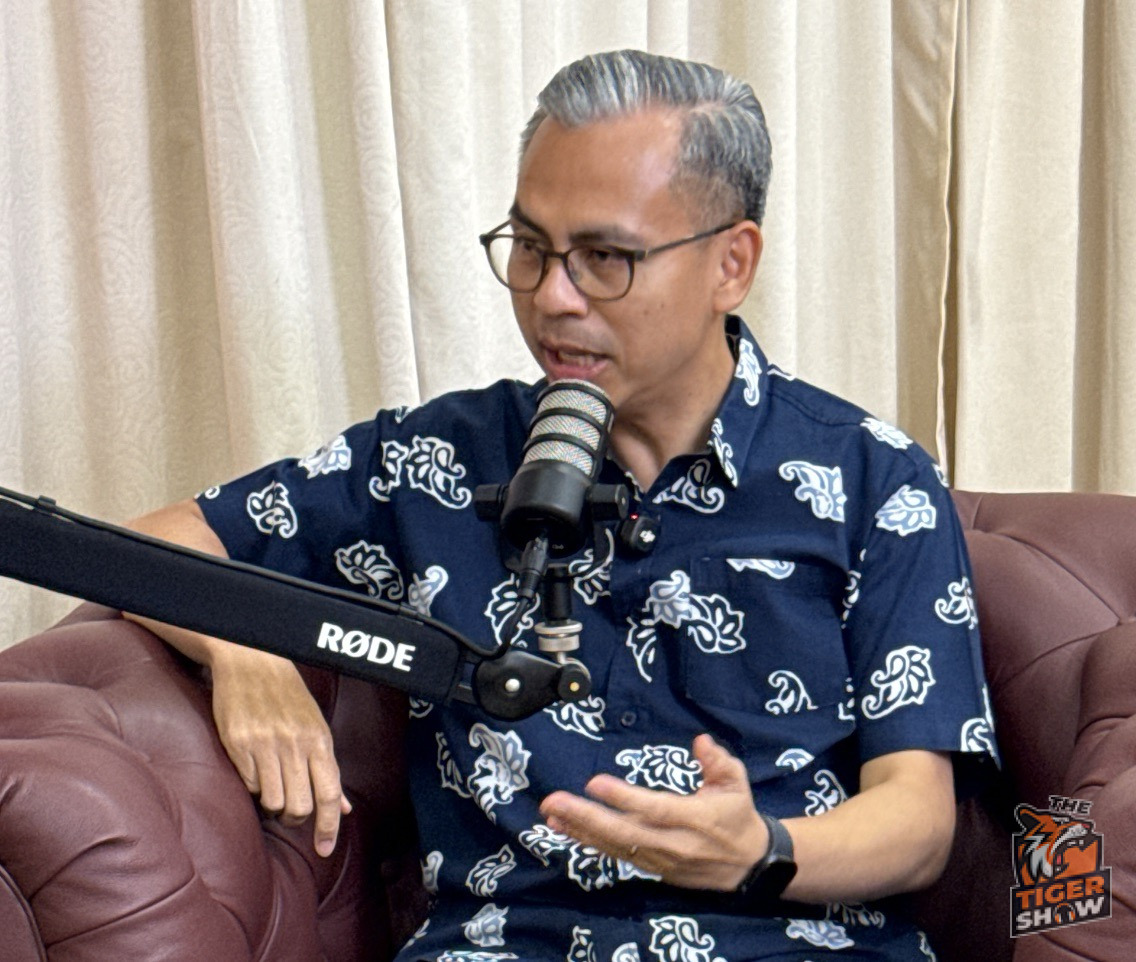
KUALA LUMPUR: Pakatan Harapan (PH) maintains that those convicted in high-profile corruption cases should serve their sentences in full, even as the coalition respects the Yang di-Pertuan Agong's power of pardon.
PH communications director Datuk Seri Fahmi Fadzil said that position had not changed following the conditional pardon granted to former prime minister Datuk Seri Najib Tun Razak last week.
"Individuals involved in high-profile corruption cases must serve their full sentences as a lesson to the people," he said.
Fahmi, who is also communications minister, was speaking as a guest on The Tiger Show podcast, hosted by journalist Amin Iskandar.
He said PH respected Sultan Ibrahim's authority over pardons under Article 42 of the Federal Constitution, and regarded the decision as having been made in line with the Constitution and the laws of the country.
PH's stand, he added, was not driven by sentiment towards any individual.
"This is not a matter of revenge or anything personal against the figure of someone named Datuk Seri Najib... The Prime Minister (Datuk Seri Anwar Ibrahim) has said many times, in and out of Parliament, that he has no motive of revenge, but that this is about the rule of law," he said.
On Sept 18, the Pardons Board for the Federal Territories of Kuala Lumpur, Labuan and Putrajaya decided that Najib could serve the rest of his sentence under house arrest until Aug 23, 2028, subject to payment of a RM50 million fine and other conditions. The pardon is void if any condition is breached.
The fine fund and the power of the ballot
During the interview, Amin raised the public fundraising drive to help Najib pay the fine, as well as the tendency among some to hail those convicted of corruption as heroes.
Fahmi responded by reaffirming PH's rejection of corruption, adding that voters have the power to punish at the ballot box.
UMNO launched the Tabung Solidariti Najib Razak on Sept 18. UMNO president Datuk Seri Dr Ahmad Zahid Hamidi said contributions were voluntary and that the initiative would be run transparently and in compliance with the law.
UMNO secretary-general Datuk Dr Asyraf Wajdi Dusuki said many donors had given as little as RM10 or RM50, and stressed that no one was obliged to contribute. He described the fund as a gesture of concern and solidarity with Najib.
According to Asyraf, the fund had reached RM1 million by the morning of Sept 19, and he expected it to hit RM2 million by Sept 21. No updated total has been announced.
Najib's lawyer, Tan Sri Muhammad Shafee Abdullah, has said his client faces difficulty meeting the fine condition because much of his assets remain frozen. The Attorney-General was reported earlier this week as saying there had been no development on payment of the fine.
'Not the individual, but the institutions'
Fahmi said PH's struggle was about something larger than one man, namely repairing the institutions meant to safeguard public funds.
"It's not the individual Najib Razak, but what made it possible. These institutions are the ones that are supposed to look after the people's money," he said.
He cited the impact of the problems at Lembaga Tabung Haji and FELDA on ordinary people, particularly Malays who depend on those institutions.
"I'm sensitive about FELDA because my father worked for FELDA. The 1MDB debt will take 20 to 30 years to pay off," he said.
The money being used to service that debt, Fahmi said, could otherwise have funded hospitals, clinics and other basic infrastructure for the public.
Finance Ministry records show the government's total 1MDB obligations stand at RM51.4 billion. Of this, RM42.5 billion has been paid, while the remaining RM8.9 billion is in government-guaranteed sukuk comprising RM5 billion in principal and RM3.9 billion in interest, maturing in 2039.
The government has so far recovered RM31.3 billion through asset recovery efforts in several countries, leaving an estimated net loss of about RM20 billion, the ministry said in a statement on Sept 13.
A story of detention without bail
Fahmi also retold a story he said Anwar had once shared, about a person held in detention for a long period because they could not afford bail. Details of the account, including the person's identity and length of detention, were not given and could not be independently verified.
The story raises an issue distinct from Najib's case. A detainee who cannot post bail has not been convicted of any offence and is awaiting trial, whereas Najib is serving a sentence after being convicted by the courts in the SRC International case.
Accused persons who cannot afford a lawyer may seek legal aid, including at the remand and bail stage, through the National Legal Aid Foundation (YBGK).
← Kembali ke halaman utama