
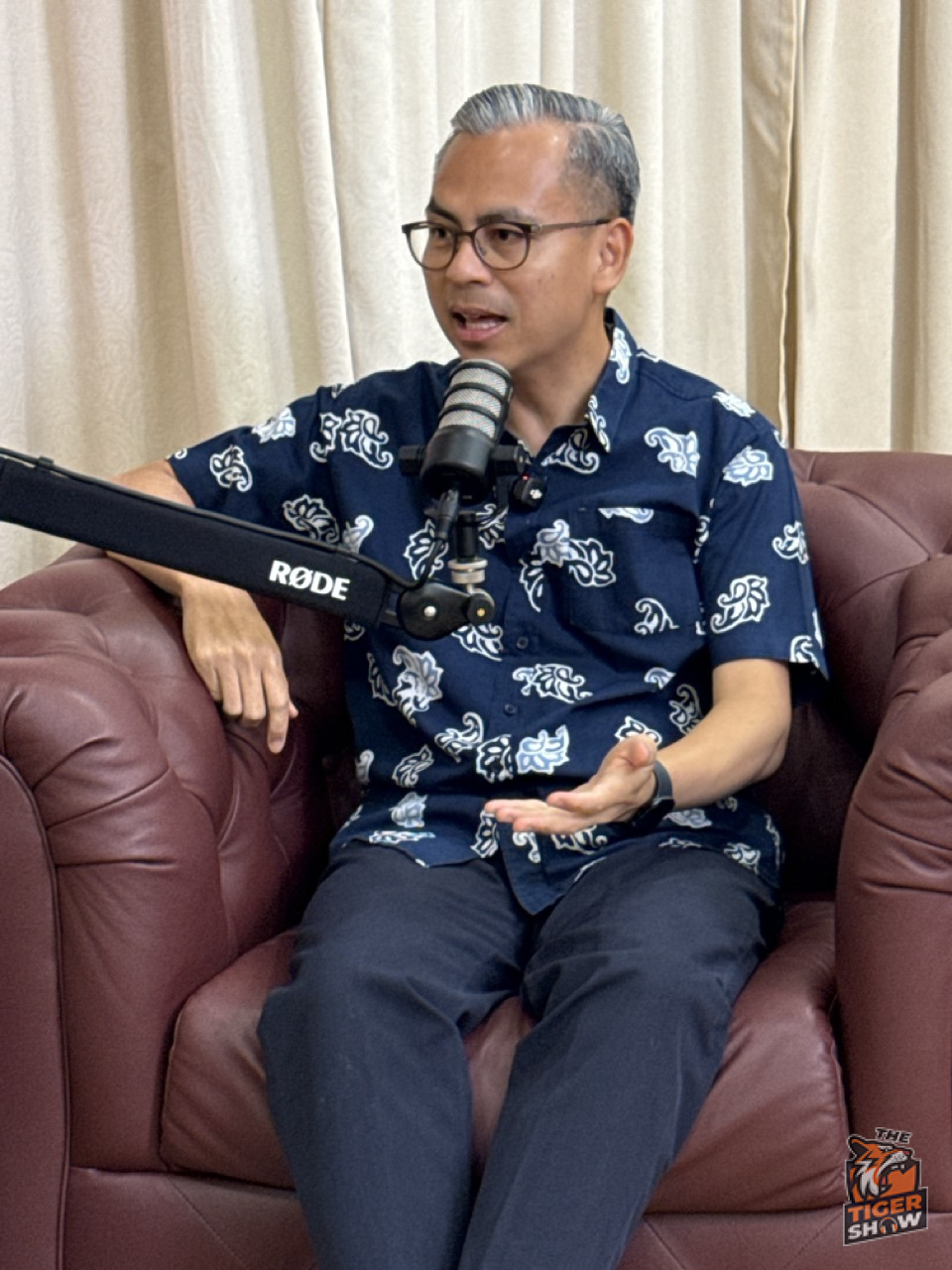
KUALA LUMPUR: Decisions to remove content from social media are made by the platform providers themselves, not by the Malaysian Communications and Multimedia Commission (MCMC) or any minister, Communications Minister Datuk Seri Fahmi Fadzil said.
He rejected claims that the government uses MCMC as a political tool to curb freedom of expression, describing the commission instead as a line of protection for users in the digital space.
"Many people misunderstand, for example on content takedowns on social media platforms such as Facebook. It is not a minister who decides, not Fahmi Fadzil, not MCMC, but the action of the platform itself," he said.
Fahmi was speaking as a guest on The Tiger Show podcast, hosted by journalist Amin Iskandar.
Complaints received by MCMC, he said, are referred to the platform providers, which then assess whether the content breaches their community guidelines or the Communications and Multimedia Act 1998 (Act 588).
"For example, if I complain to MCMC, I file the complaint myself, it does not mean the content will be taken down. The ones who take it down are Facebook or TikTok, if they review it and agree the content breaches the law," he said.
He gave a sense of the scale of requests the commission has sent.
"That's why, say MCMC has now sent almost half a million requests to take down content, perhaps only 90 per cent of the total is taken down, because this is the platform provider's action, not a decision by MCMC," he said.
Fahmi said all platform providers operating in Malaysia had so far cooperated, particularly in dealing with content touching on race, religion and royalty (3R).
Satirical and mocking content, however, is usually judged by the platforms as not breaching the law, he said.
'A tool for the people'
Defending MCMC's role, Fahmi said much of the complaints it receives come from members of the public facing online threats.
"MCMC is a tool for the people's (safety)... they complain about cyberbullying, about the spread of intimate images, about scams and much more... so however the people want MCMC's services, that is how MCMC will serve," he said.
He also cited the amendment to Section 233 of the Communications and Multimedia Act as an example of reform, which he said ensures parody and satire are no longer easily treated as offences, and raises the threshold from "offensive" content to "grossly offensive".
"So for the prosecution and the defence, they know how to argue in court... At least that is one reform within MCMC itself," he said.
Who asks, who acts
Fahmi's explanation separates two roles in the takedown process. The platform is the party that carries out the removal, while MCMC is the party that channels the request, whether it originates from a public complaint or a referral from an agency.
Within that framework, the number of requests MCMC sends and the rate at which platforms comply become key measures of the regulator's accountability.
A breakdown of those requests by content category, source of complaint, legal basis invoked and the reasons platforms decline a request was not disclosed in the interview. Nor was the avenue of appeal for users whose content has been removed.
← Kembali ke halaman utama