
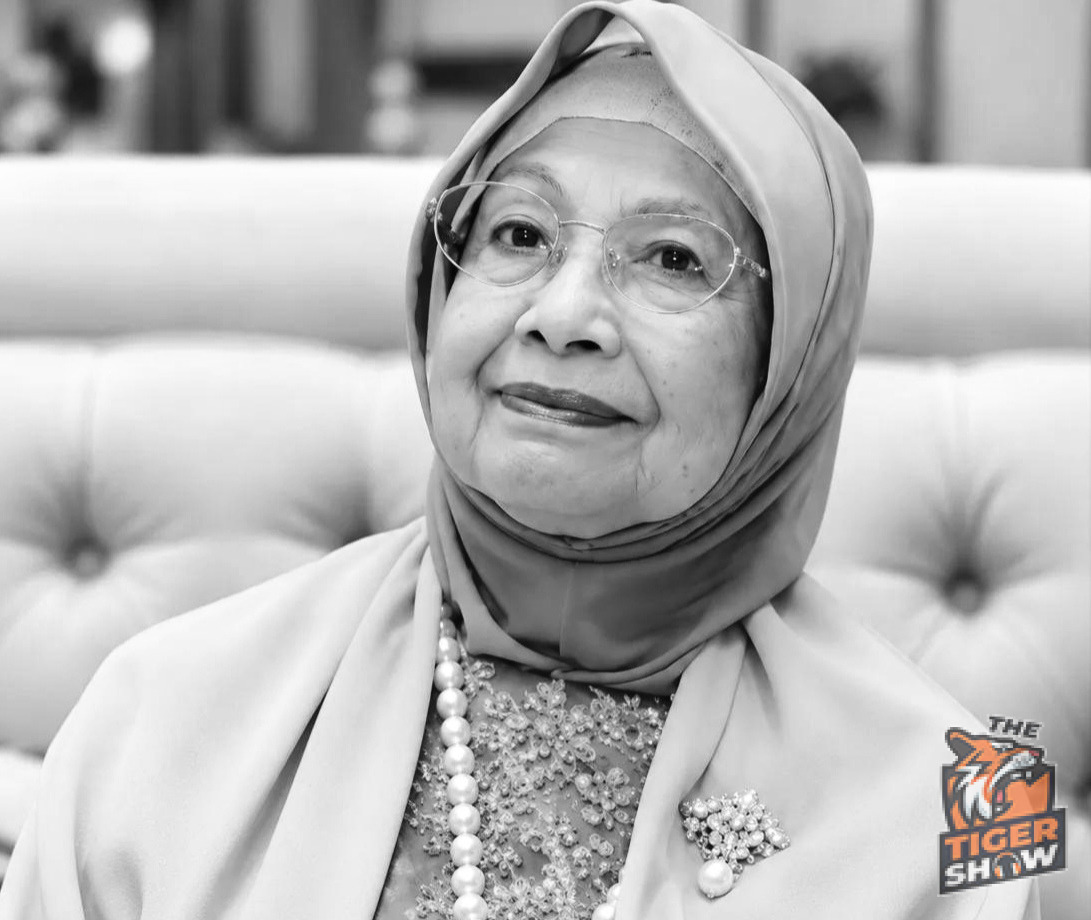
KUALA LUMPUR: Teaching village communities how to care for mothers and babies was among Tun Dr Siti Hasmah Mohd Ali's contributions to public health, work that began when she served as a doctor in Kedah long before Tun Dr Mahathir Mohamad became prime minister.
Siti Hasmah, who died on Sept 28 at the age of 100, built a career in medicine, health worker training and community education that reached well beyond treating patients in hospital.
In a piece by Dr Raudah Mohd Yunus published by Universiti Malaya's Department of Social and Preventive Medicine in 2018, Siti Hasmah is identified as one of the figures who reached out to traditional midwives, traditional healers and village women to improve postnatal and newborn care practices.
That approach relied on sustained explanation and engagement with communities to change unsafe practices. She also organised village activities to promote hygiene, healthy living and childhood immunisation.
Family planning was part of her work too, at a time when misconceptions and taboos were among the obstacles to women's health education.
Born in Klang, Selangor, in 1926, Siti Hasmah went on to study medicine in Singapore after World War II, making her one of the earliest Malay women to enter the profession.
She graduated in 1955 and did her housemanship at Hospital Besar Kuala Lumpur. Her career then continued in Alor Setar, Kedah, including as a medical officer at the government hospital.
A profile by the Perdana Leadership Foundation records her appointment in 1965 as the first woman medical officer in the Maternal and Child Health Department. In 1974, she became the first woman to hold the post of State Maternal and Child Health Officer.
Her involvement in health training also included serving as principal of the Rural Health Training School in Jitra, a role that linked clinical work with preparing health workers to serve rural communities.
After retiring from government service in 1979, she lectured at Universiti Malaya's Faculty of Dentistry until 1981.
She continued her health work through professional and community organisations, among them the Kedah Family Planning Association, the Malaysian Medical Association Foundation and bodies concerned with the health of mothers, infants and children.
She also wrote on family medicine and on the links between socioeconomic factors and pregnancy and childbirth in Malaysia.
An RTM profile published on Sept 28 also noted her involvement in efforts against drug abuse, in mental health and in advocating for women on the international stage. In September 1995, she led the Malaysian delegation to the United Nations Fourth World Conference on Women in Beijing.
← Kembali ke halaman utama